Bright Healthy Smiles homeBright Healthy Smiles homeBright Healthy Smiles home
Orthodontics — Upper East Side

Early Orthodontic Treatment for Healthy Growth and Development

Most people think of orthodontic treatment as something that happens in the teenage years — after all the permanent teeth have come in. But some of the most important orthodontic intervention happens years earlier, while a child’s jaw and face are still actively growing.

Early orthodontic treatment, often called Phase 1, takes advantage of that growth window to guide the development of the jaw, create space for incoming permanent teeth, and address bite issues before they become significantly more complex. When the timing is right, early orthodontic treatment gives Manhattan children an easier path: it can reduce the length and complexity of later treatment — and in some cases eliminate the need for it entirely.

At Bright Healthy Smiles, our board-certified orthodontists evaluate every child’s growth and bite development from their first orthodontic screening. We recommend early treatment only when there is a clear clinical benefit — never for its own sake.

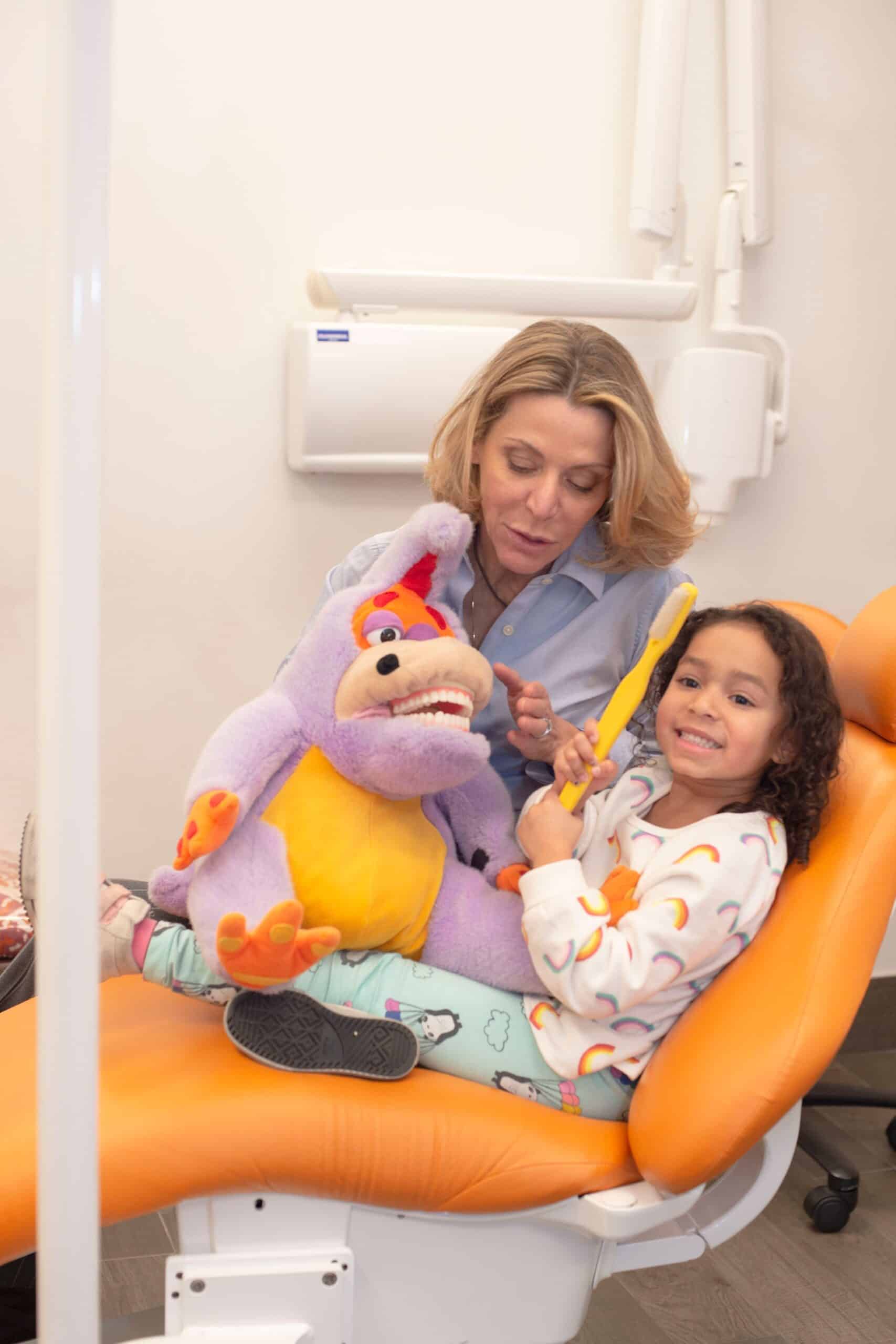
Dr. Corielli with young patient
Getting Ahead of Dental Issues

A Proactive Approach to Orthodontic Development

Early orthodontic treatment focuses on guiding growth during key developmental years. Rather than waiting for all permanent teeth to erupt, certain concerns can sometimes be addressed while children are still growing, helping improve development and reducing the risk of more significant issues later.

Treatment recommendations are always individualized. Many children simply benefit from observation and growth monitoring, while others may benefit from interceptive orthodontics — for children in Manhattan, that means treatment designed to create space, improve bite relationships, or guide healthy jaw development at exactly the right moment.

Early identification of developing concerns
Monitoring growth and jaw development
Improved space for erupting permanent teeth
Support for healthy bite development
Individualized treatment recommendations
Focus on long-term oral health and function
More About Early Treatment

Learn More About Early Orthodontic Treatment at Bright Healthy Smiles

Every child develops differently. Our team helps parents understand growth patterns, treatment timing, and available options so they can make informed decisions about their child’s orthodontic care.

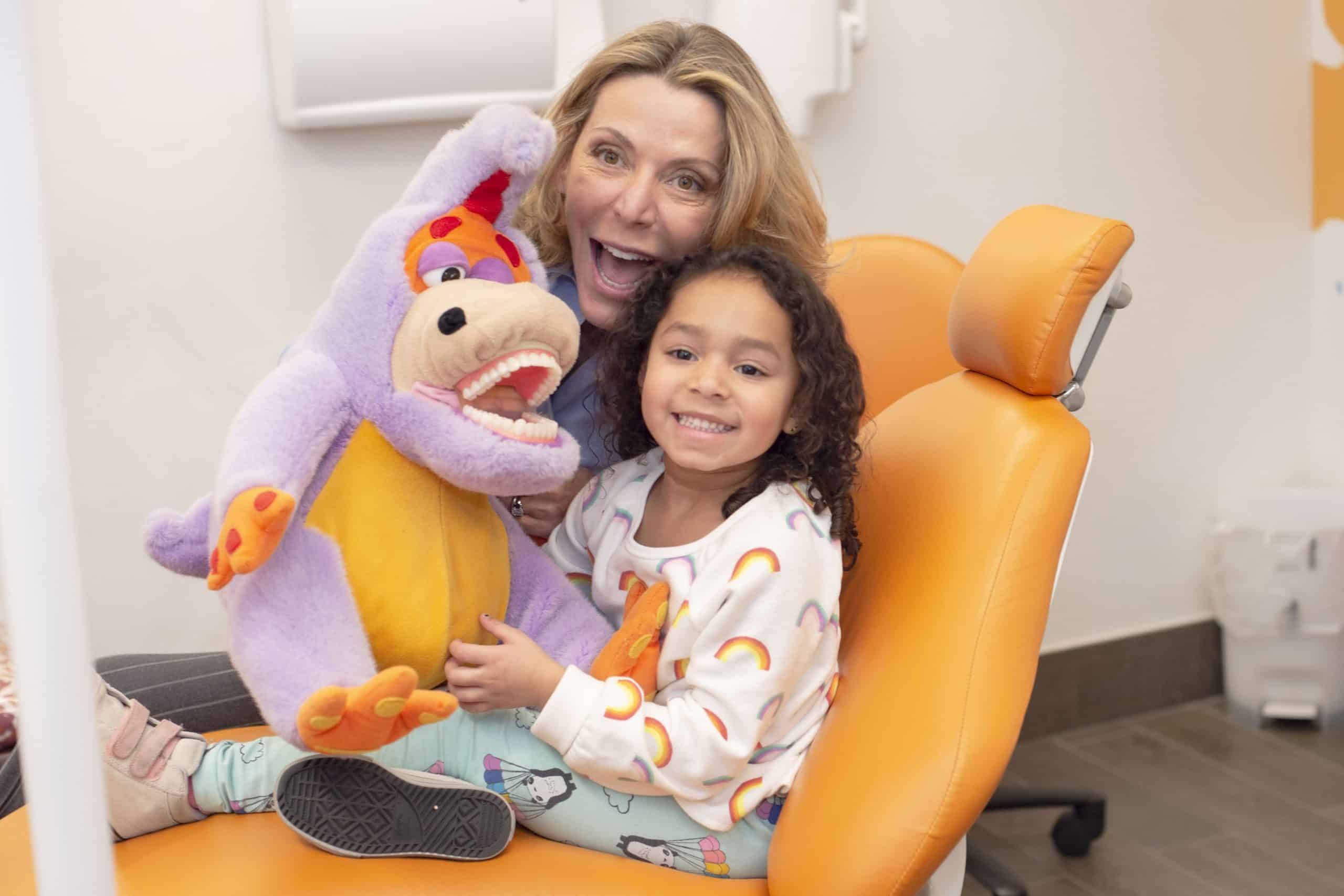
Child playing with a plush toy before an early orthodontic treatment evaluation in Manhattan

Orthodontic Evaluations Around Age Seven

Many orthodontic concerns can be identified early, even when treatment is not immediately needed. Early evaluations help establish a baseline and guide future care decisions.

Growth and Development Monitoring

Some children benefit most from regular monitoring as permanent teeth erupt and facial growth continues. Careful observation helps ensure treatment begins at the appropriate time.

Space Management

When needed, orthodontic appliances may help preserve or create space for permanent teeth and support healthier development.

Bite Development

Early treatment may help address developing bite concerns that could become more difficult to correct later in adolescence.

Orthodontic Evaluation

When Should My Child First See an Orthodontist?

“When should my child see an orthodontist?” is the question NYC parents ask us most — and the answer surprises many of them. The American Association of Orthodontists recommends that every child have their first orthodontic evaluation by age 7.

At age 7, enough permanent teeth have erupted — typically the first molars and some incisors — for an orthodontist to evaluate how the bite is developing, whether the jaw has adequate space for the incoming permanent teeth, and whether any issues are emerging that would benefit from early attention.

An orthodontic evaluation at age 7 does not mean your child needs treatment at age 7. Most children at this screening do not require any immediate intervention. What it does mean is that we have a baseline — we know where your child’s development is, what trajectory it is on, and exactly when to watch for.

During the evaluation, our orthodontists assess:

  • Jaw size and relationship — upper and lower jaw proportion and growth direction
  • Bite alignment — overbite, underbite, crossbite, open bite
  • Tooth eruption — whether teeth are coming in on schedule and in the right position
  • Space availability — whether there is adequate room for all incoming permanent teeth
  • Habits — thumb sucking, mouth breathing, or tongue thrusting that may be affecting development

After the evaluation, we discuss our findings with parents in plain language and give a clear recommendation: treatment now, monitoring, or “everything looks great — we’ll check again at the next appointment.” We never recommend orthodontic intervention treatment without a specific, explainable clinical reason.


Two sisters smiling after gentle kids root canal treatment at our NYC pediatric practice. Two smiling children after a comfortable pediatric sedation dentistry visit in NYC with laughing gas.

Phase 1 — Early Intervention (Ages 6–10)

Phase 1 treatment begins while the child still has a mix of primary and permanent teeth. The goal is not to achieve a perfectly aligned smile — it is to create the conditions that make a perfect alignment achievable and sustainable later.
Phase 1 treatment addresses:

  • Jaw width — expanding a narrow upper arch that would otherwise crowd the incoming permanent teeth
  • Jaw relationship — correcting a skeletal discrepancy between the upper and lower jaw while the bones are still responsive to guidance
  • Severe bite issues — crossbites, underbites, and significant overbites that worsen if left untreated during the growth phase
  • Space management — creating and maintaining room for permanent teeth

Phase 1 treatment typically lasts 6 to 18 months, followed by a rest period during which the remaining permanent teeth erupt and jaw growth continues. During this rest period, we monitor progress at regular check-ins.

Do You Lose All Your Baby Teeth?

Phase 2 — Comprehensive Treatment (Typically Ages 11–14)

Phase 2 begins once most or all of the permanent teeth have erupted. This is the more familiar braces or Invisalign phase — the comprehensive alignment of all permanent teeth into their ideal positions.
Children who completed Phase 1 treatment typically have shorter Phase 2 treatment than children who did not. In some cases, Phase 1 addresses the issue so completely that Phase 2 is minimal or unnecessary. In others, Phase 2 is still needed — but the work done in Phase 1 makes it more predictable and more effective.

Hygienist providing kids dental cleanings for Upper East Side siblings with a plush puppet

More Than Just Early Treatment

The benefits of early orthodontic evaluation often extend far beyond tooth alignment alone.

Toddler in a heart-print dress holding a phone handset at the reception desk

Healthy Development

Early evaluations help ensure growth and development are progressing as expected.

Improved Function

Addressing developing bite concerns may support healthier chewing, speaking, and oral function.

Greater Confidence

Creating a healthy foundation for a child's smile can contribute to greater confidence as they grow.

Long-Term Planning

Early evaluations help families make informed decisions about future orthodontic care.

Building Self-Esteem

Growing Smiles, Growing Confidence

Every child follows a unique developmental path. These moments reflect the supportive, family-centered approach we bring to orthodontic care.

Dentist reassuring a young boy during an urgent kids dental care visit on the Upper East Side. Two young boys playing with foam letters and a tablet in the waiting area
Why Choose Us

Why Families Choose Bright Healthy Smiles for Early Orthodontic Treatment

Families throughout the Upper East Side trust Bright Healthy Smiles because we take a thoughtful, individualized approach to orthodontic care. We recognize that every child develops differently and believe treatment decisions should be based on each child’s unique needs—not a predetermined timeline.

Our team combines clinical experience with a warm, educational approach that helps parents feel informed and confident. Whether treatment is recommended today or years from now, our goal is always to support healthy development and long-term oral wellness.

Personalized treatment recommendations
Growth-focused orthodontic philosophy
Comprehensive developmental evaluations
Collaborative communication with parents
Child-friendly, supportive environment
Integrated pediatric dental and orthodontic care
Costs & Affordability

Early Orthodontic Treatment Costs & Financial Information

We believe families deserve clear information when considering orthodontic care. Our team takes time to explain recommendations, anticipated treatment needs, and associated fees so parents can make informed decisions.

Bright Healthy Smiles is a fee-for-service practice focused on individualized care. We are happy to discuss insurance reimbursement opportunities and answer any financial questions before treatment begins.

Dentist beside a young boy in the reception play area

Insurance Reimbursement Support

Our team can help families understand available orthodontic benefits and assist with claim submission when applicable.

Fee-for-Service Care

Treatment recommendations are based on your child's developmental needs and long-term health rather than insurance limitations.

Transparent Financial Guidance

Before treatment begins, we review fees, timelines, and expectations in detail so families know exactly what to expect.

From Our Families

What Manhattan Families Are Saying

Dr. Corielli, Dr. Moursi, Dr. G and Dr. Charlotte are all great. We’re lucky to have Bright Healthy Smiles taking care of our children’s dental health.

Happy Parent

Great service and great environment; it’s so easy for kids to go without fear. Dr. Corielli and her staff make kids feel comfortable and look forward to dental visits.

New Patient

As a mother of five, including a special‑needs daughter, I’ve never had better care. The staff explain everything and treat each child gently. Dr. Corielli calmed my three‑year‑old while extracting her tooth. The new uptown office has iPads and high‑definition screens. We always feel welcome.

Returning Family
Functional Appliances and Palate Expanders

What Are Functional Appliances?

Functional appliances are orthodontic devices designed to influence jaw growth by altering the position or relationship of the upper and lower jaws. Unlike braces or aligners, which move teeth, functional appliances work by redirecting the forces generated by the muscles of the face and jaw — essentially harnessing the body’s own growth to achieve a structural change.
Functional appliances are most effective during the active growth phase — typically between ages 6 and 12. After growth slows, the same issues require more complex treatment that may include jaw surgery.
Common functional appliances we use at Bright Healthy Smiles include:

Palate Expander (RPE)

Worn on the upper arch to gradually widen a narrow palate, creating space for incoming permanent teeth and correcting posterior crossbites. This is one of the most commonly recommended Phase 1 appliances.

Herbst Appliance

Used to correct a significant discrepancy between the upper and lower jaw — specifically, to encourage the lower jaw to grow forward into better relationship with the upper jaw.

Twin Block

Similar in function to the Herbst, used to influence jaw relationship during active growth.

Space Maintainer

Placed after early loss of a primary tooth to hold space for the incoming permanent tooth and prevent drifting of neighboring teeth.

Palate Expanders — What Parents Need to Know

The palate expander is one of the most frequently recommended Phase 1 appliances, and one that raises the most questions from parents.
A palate expander works by applying gentle, gradual force to the two halves of the upper palate, which are joined by a suture (a joint between bones) in the center. Before the suture fully fuses — which happens in the mid-to-late teens — it is possible to slowly separate the two halves of the palate and allow new bone to form in the space created. The result is a wider upper arch.
Parents use a small key to activate the expander at home, typically once per day. There may be a small gap between the upper front teeth during expansion — this is normal and closes on its own as the teeth shift into the wider arch. Mild soreness after activation is also normal and passes quickly.
Palate expansion is far more effective during childhood and early adolescence than in adulthood. Waiting typically means a more complex procedure later — sometimes involving surgery. If a palate expander has been recommended for your child, the timing recommendation is based on their specific growth stage, not arbitrary scheduling.

Meet Our Specialists

Meet Our Orthodontic Team

Our team is committed to helping children grow into healthy, confident smiles through thoughtful evaluations, personalized care, and ongoing support.

Experienced providers focused on growth and development
Collaborative approach to pediatric orthodontic care
Individualized treatment planning
Child-centered philosophy
Commitment to long-term oral wellness

Ready to Learn If Early Orthodontic Treatment Is Right for Your Child?

An early orthodontic evaluation can provide valuable insight into your child's growth and development. Our team is here to answer your questions and help you understand the best next steps.

Frequently Asked Questions

Early Orthodontic Treatment FAQs

Answers to common questions parents ask about Phase 1 orthodontics and early orthodontic evaluations.

Early orthodontic treatment, often called Phase 1 orthodontics, refers to treatment provided while a child is still growing. The goal is to address specific developmental concerns, improve bite relationships, or guide growth when appropriate.

The American Association of Orthodontists recommends an orthodontic evaluation around age seven. This allows developing concerns to be identified early, even if treatment is not immediately needed.

Schedule an orthodontic evaluation — the only way to know is to have an orthodontist assess your child’s bite, jaw development, and tooth eruption. The American Association of Orthodontists recommends age 7 for a first screening. At Bright Healthy Smiles, we provide an honest assessment of whether intervention is clinically beneficial or whether watching and waiting is the right approach.

Certain bite concerns, space issues, jaw development concerns, and eruption problems may benefit from early orthodontic intervention. Recommendations are always based on the individual child.

Often, yes — Phase 1 treatment creates the conditions for a better outcome in Phase 2, but it does not always eliminate the need for comprehensive alignment. What it typically does is reduce the length and complexity of Phase 2 treatment. In some cases, Phase 1 is so effective that Phase 2 is minimal or unnecessary.

The ideal time for palate expansion is before the mid-palatal suture fuses, typically before the mid-to-late teens. We most commonly recommend expansion between ages 7 and 12. Earlier is generally more effective than later — waiting until a child is older often means the bone is less responsive and expansion takes longer.

Phase 1 treatment typically lasts between 6 and 18 months, depending on the specific issue being addressed and the appliance being used. This is followed by a monitoring period, usually 6 to 18 months, before Phase 2 begins.

Food restrictions depend on the specific appliance. Fixed appliances require avoiding hard, sticky, and crunchy foods. We provide a complete list of what to avoid at the start of treatment. Most children adapt quickly, and the dietary restrictions are worth the outcome.

Two-phase treatment involves two phases of care, so there are costs associated with each. However, if Phase 1 reduces the complexity and duration of Phase 2 — or eliminates it — the overall cost can be comparable or even lower. More importantly, some Phase 1 interventions prevent issues that would eventually require jaw surgery if left untreated — which is a significantly more costly and involved procedure than early orthodontic treatment.